
REDPOINT AI
Data Readiness for an AI-Driven World
The data foundation that powers every agent, model, and use case
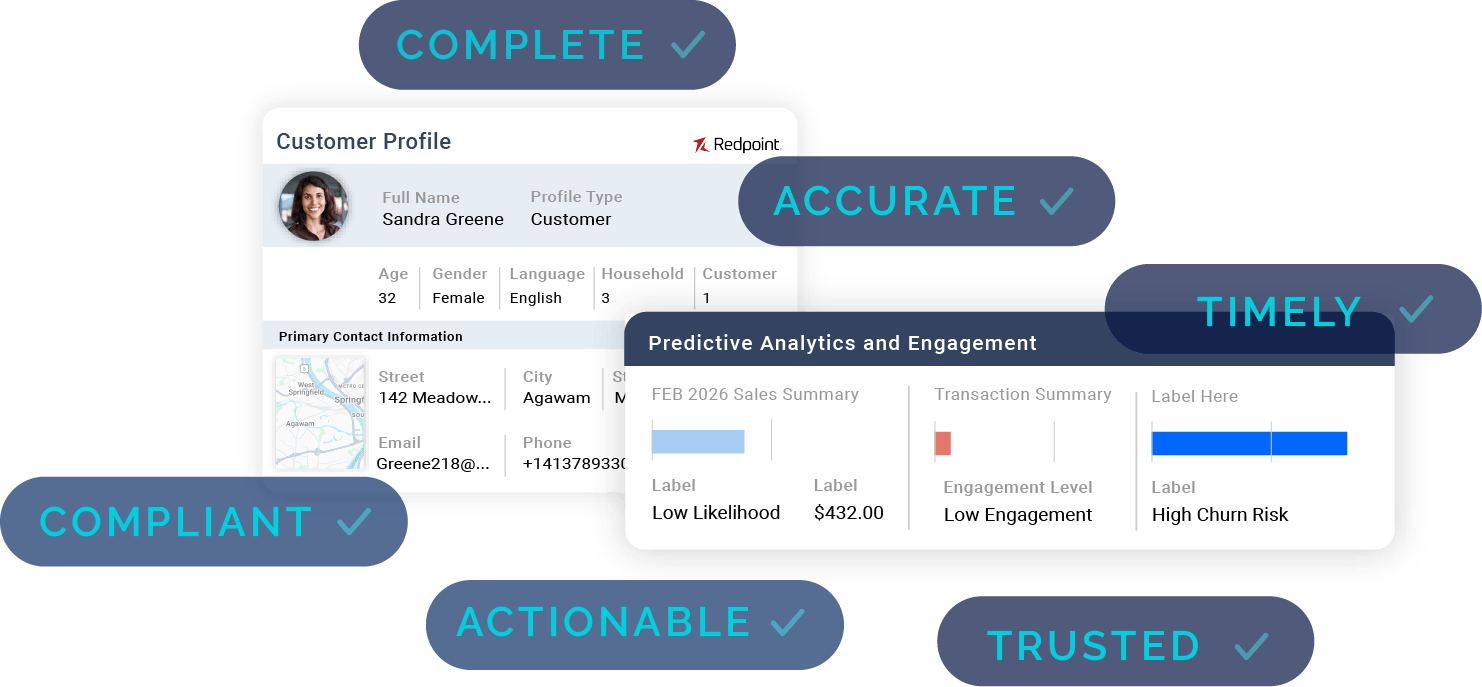
Fueling AI Innovation
Even the best AI agents stumble when the customer data that fuels them isn’t up to the task. Feeding AI a patchwork of mismatched, incomplete profiles doesn’t yield clarity or trust – it produces flawed insights, wasted resources, and customer interactions that feel disconnected.
By combining data mastery with AI innovation, Redpoint empowers agents with a high-quality customer data foundation to act with precision and certainty.
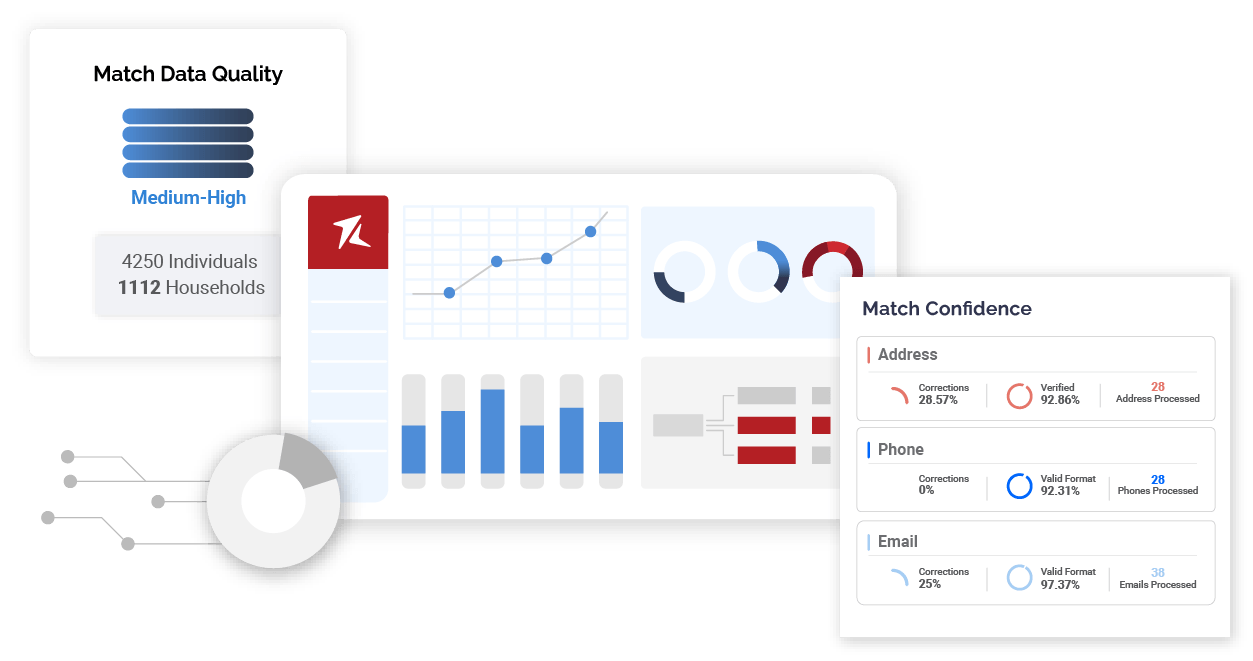
The Right Data Makes All the Difference
Successful AI initiatives need data that is accurate, complete, contextual, and always up to date. Redpoint connects structured and unstructured data to reveal the behavioral context and deeper human insights behind every customer.
Use the Redpoint as your data foundation to:
- boost model accuracy
- improve targeting
- power better outcomes and increased revenue
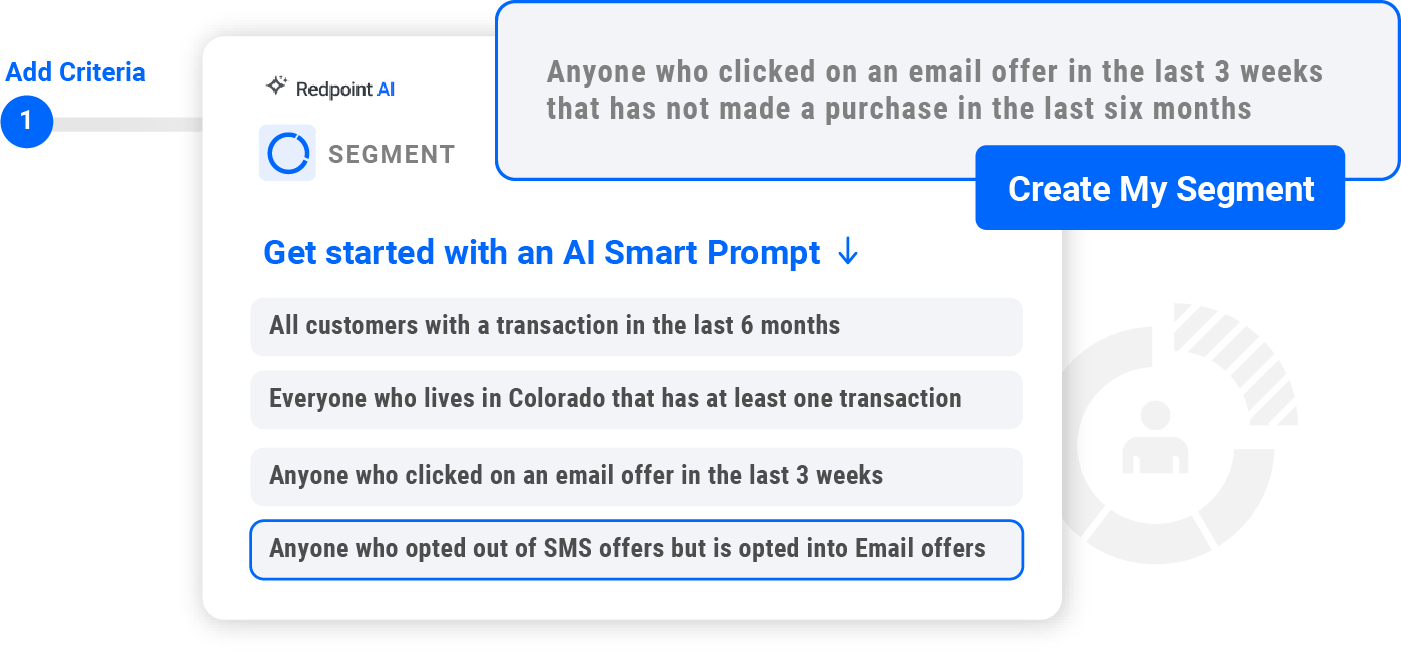
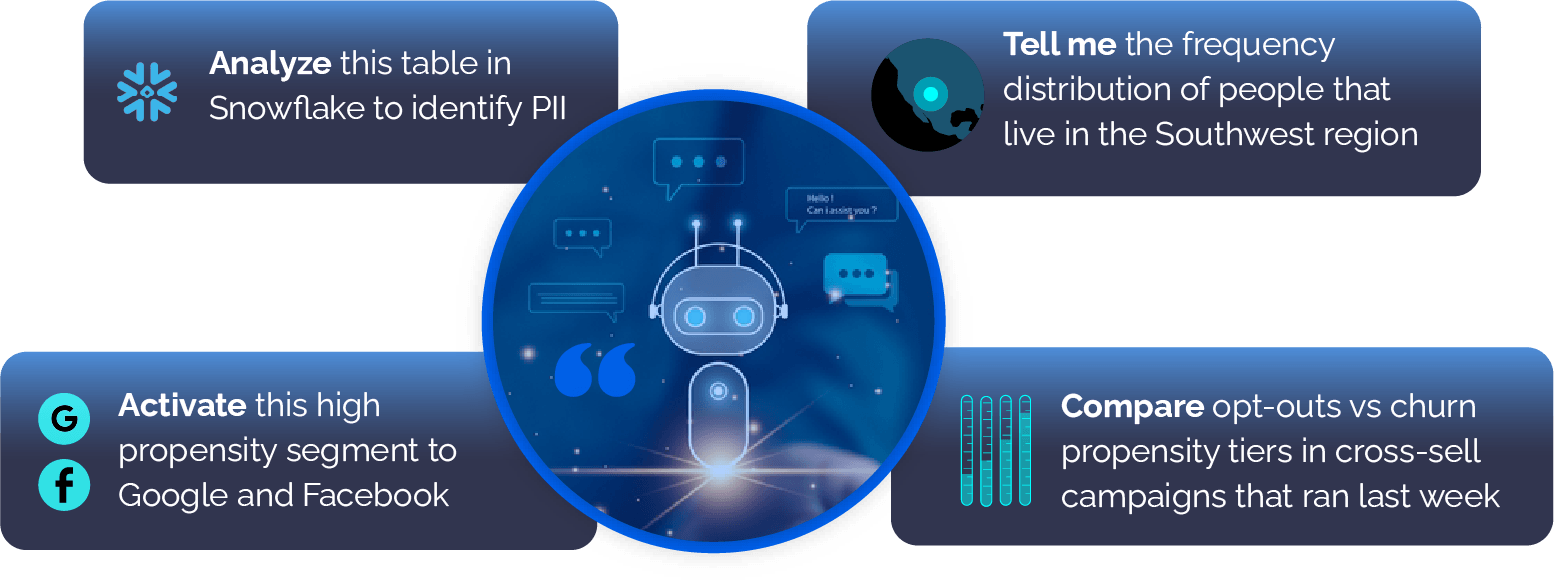
Build Segments with Natural Language
Build precise audiences quickly using plain English (e.g., “patients who visited in the last 30 days”). Redpoint helps you segment customers based on behavior, preferences, demographics and other attributes for targeted programs and campaigns.
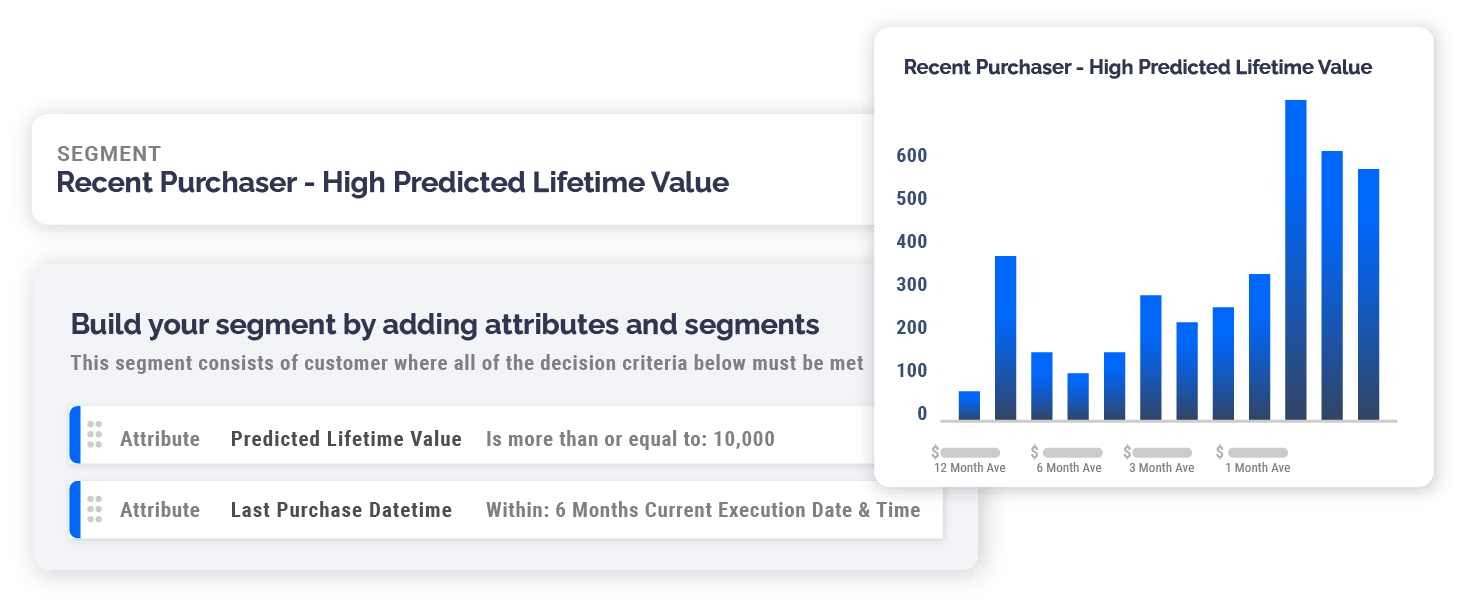
Analyze and Anticipate Customer Behavior with AI
Deploy AI-powered customer predictions fast with Redpoint’s ready‑to-use models. Spot your best customers, predict purchases, and prevent churn before it happens.
Or bring your own models. With BYOM, analyze patterns, guide smarter decisions, and automate next‑best actions for personalized journeys and campaigns.
Power AI Agents with Decision-Ready Data
Redpoint’s MCP Server transforms identity resolution, data quality, and segmentation into discoverable tools for AI agents. Rather than parsing raw records, your AI models query governed resources, ensuring every execution is grounded in high-integrity identity and real-time customer context.

With Redpoint’s segmentation capabilities, our communications are timely, relevant and
deeply personal. We scale that one-to-one marketing across every customer and prospect.
– Chief Commercial Officer, Leading National Travel & Hospitality Organization
Data Readiness for AI: Resources

Frequently Asked Questions About AI-Ready Data
What is AI-ready data?
AI-ready data is customer data that’s complete, accurate, timely, actionable, trusted, and compliant, shaped for a specific AI use case. Those six qualities aren’t interchangeable. Data that’s accurate but incomplete gives a model a partial picture. Data that’s complete but stale gives it the wrong one. AI-readiness also requires context: the relationships, behavioral signals, situational details, and active metadata that help AI systems understand what the data means, not just what it contains. A data readiness approach produces AI-ready data continuously, ingesting, cleansing, enriching, and structuring it before it reaches any model or agent. AI isn’t magic. Garbage in still equals garbage out.
What is data readiness for AI?
Data readiness for AI is the organizational discipline of getting customer data fit for AI use cases and keeping it that way. Where AI-ready data describes what the data looks like when it’s right, data readiness is the practice of making it right. It starts with use cases: define what the AI needs to accomplish, then identify the minimum viable data set for that task. From there, it means automating quality, resolving identity, unifying profiles, and building governance that makes data trustworthy enough to act on autonomously. It’s not a project you complete. It’s an ongoing practice that adapts as use cases evolve and customers change.
What's the difference between clean data and AI-ready data?
Clean data is accurate, deduplicated, and free of errors. That’s the baseline. It’s not enough. AI-ready data raises the bar in two ways. First, context: where clean data focuses on master data quality, AI-ready data captures relationships, behavioral signals, situational details, and active metadata that help AI systems understand what data means. Context is what makes data actionable and trusted. Second, purpose: AI-ready data is shaped for a specific use case. Traditional data quality processes often remove outliers; AI-ready data preserves them when they’re relevant. In fraud detection, the anomaly is the point. Clean is where most teams stop. It’s where AI readiness starts.
How does a CDP support AI initiatives?
A customer data platform (CDP) supports AI by providing unified customer profiles: a single, accurate view of the customer that models and agents can query for consistent, context-aware decisions. A CDP gathers first-party data across channels, resolves identity, and builds that profile. But most CDPs are built for activation, not data readiness. They move data well; fewer get it right first. Packaged CDPs, warehouse CDPs, and marketing clouds typically don’t deliver the automated data quality, tunable identity resolution, and contextual enrichment that AI actually requires. A CDP built on a data readiness foundation fills that gap, validating, cleansing, and enriching data before it reaches any model or activation channel.
How do you prepare customer data for AI?
Start with use cases, not data. Define what the AI needs to accomplish, then work back to the minimum viable data set for that task. From there, four capabilities matter. Automated data quality: cleansing, standardization, and anomaly detection that scale automatically. Identity resolution: every interaction linked to a single, persistent customer profile across systems, channels, and lifecycle changes. Contextual enrichment: go beyond master data to capture behavioral signals, calculated attributes, and the active metadata that makes data understandable to AI systems. And continuous governance: privacy and compliance embedded into data flows, lineage tracked, quality validated against use-case requirements.
What is an agentic CDP?
An agentic CDP is a customer data platform built for AI agents as its primary users, not just human marketers. Where a traditional CDP unifies data for analysts and campaign tools, an agentic CDP makes that data governable, contextually rich, and directly callable by autonomous agents in real time. Context is what separates a functional agentic CDP from one that just adds automation. Agents need more than clean profiles. They need relationships, behavioral signals, situational details, and the active metadata that lets them understand what customer data means. A data readiness foundation is what produces that context. Without it, agents act autonomously on incomplete information: fast decisions, wrong direction.
How does data readiness support agentic AI?
Agentic AI is only as reliable as the data it acts on. Data readiness gives agents three things they can’t work without. Quality: clean, accurate, timely data so agents aren’t executing against stale or fragmented profiles. Context: active metadata, behavioral signals, and relationships that help agents understand what data means, not just retrieve it. Governance: agents query trusted, compliant resources rather than raw records, so autonomous action stays within the rules the business has set. Governance isn’t a constraint on agentic AI. It’s what makes autonomous action safe enough to trust.
What is Redpoint Global's approach to AI?
Redpoint’s approach to AI starts with the data. AI outputs are only as trustworthy as the data behind them. Redpoint provides the data readiness foundation: automated quality, tunable identity resolution, real-time profile unification, and contextual enrichment. That foundation supports three strategic areas. AI-ready data: clean, unified, governed profiles that any model, agent, or use case can rely on. Embedded intelligence: predictive models for churn, purchase prediction, and audience scoring built directly into the platform, with BYOM support. Agentic AI: an MCP Server that exposes identity resolution, data quality, and segmentation as callable tools for AI agents, so agents query governed resources directly rather than parsing raw records.