
Redpoint for payers
Put Your Members at the Center
Transform member data to fast-track health activation and engagement programs.
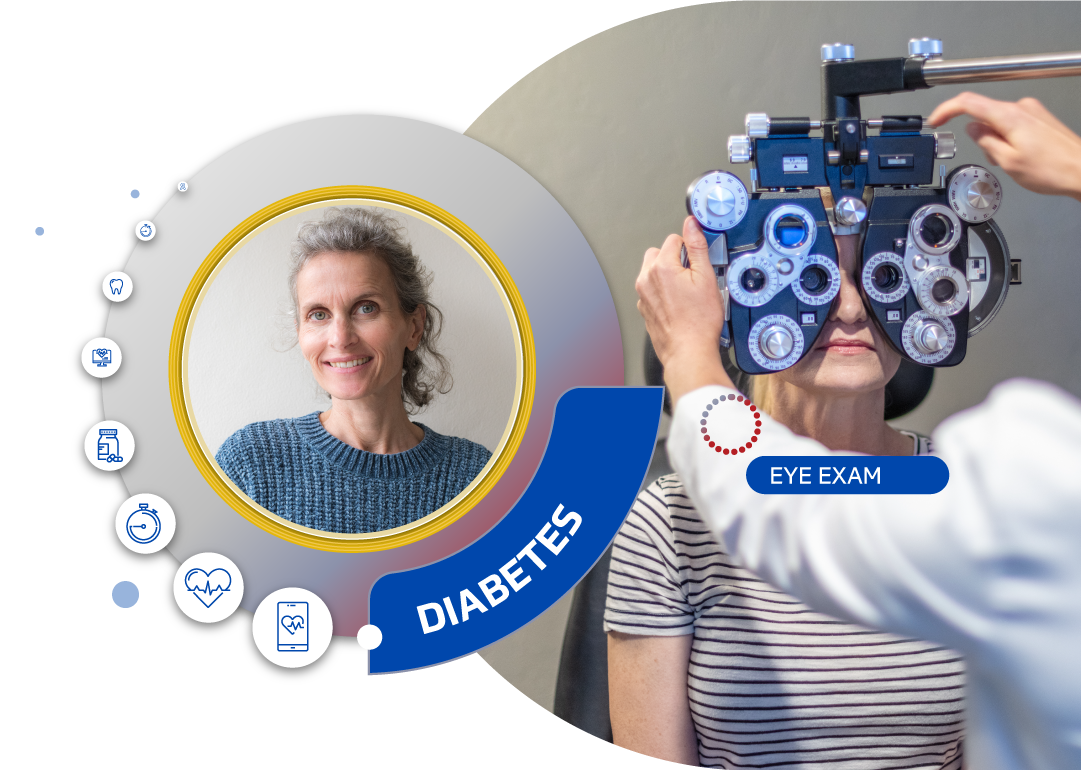
Data-Driven Healthcare Organizations Trust Redpoint






The Redpoint Difference
Elevate the member experience and improve value-based reimbursements with a CDP designed to tackle the fundamental challenges of data accuracy and accessibility. Guide members to programs that improve outcomes, increase quality scores and lower medical costs.
Identify the Right Members for Your Programs
Fully integrate all your disparate internal and external data sources to create a unified member profile. Then quickly and autonomously build dynamic members audiences – without IT – to drive personalized engagement.
Foster Behavioral Change That Lasts
Identify the right members and guide them to the right care through personalized omnichannel communication driven by data, insights and dynamic feedback – seamlessly coordinated to prevent friction.
Create a Data Foundation for Speed to Value
Quickly deploy an enterprise-grade customer data platform that enables real-time, informed decisions for immediate member-centric engagement and activation. Redpoint seamlessly fits into any technology stack and adapts with your business as your use cases evolve.
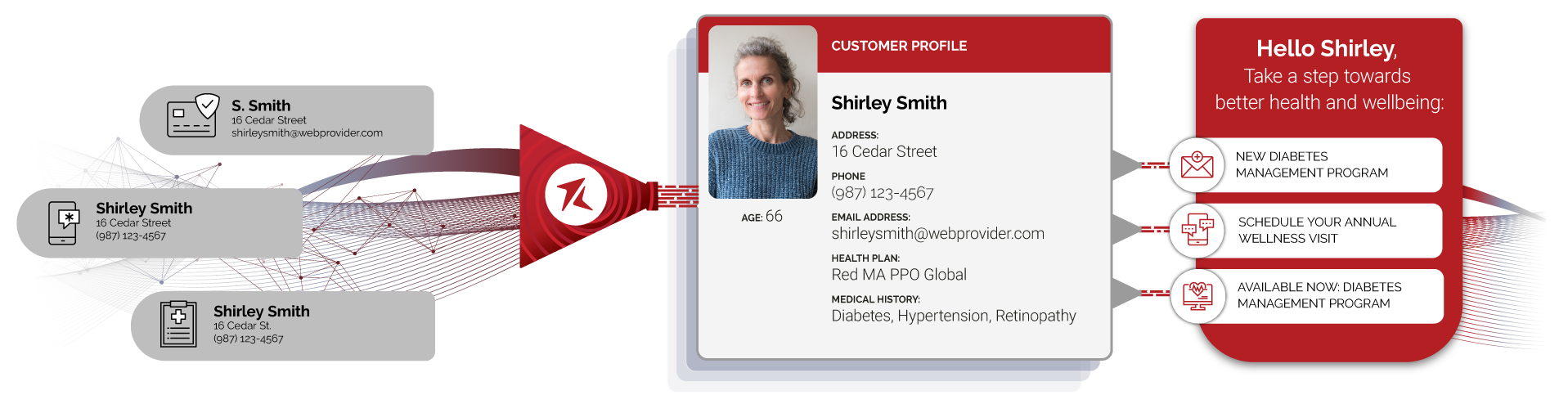
Payer Use Cases
Strategically orchestrate meaningful member journeys that drive better health outcomes and higher ROI across business units and programs in the value-based care ecosystem.
Value-Based Care

Care Gap Closure

Pre-CAHPS Program

Annual Wellness Visit

Medication Management & Adherence

Chronic Care Management
Total Medical Spend

Care Program Enrollment

Prevention & Wellness

Accurate Risk Adjustment

Behavioral Health

Health Equity
Member Experience

Welcome & Onboarding

AEP/OEP Lead Generation

Medicare Age-in

Member Portal/App Adoption

NPS & Satisfaction Surveys

“
We wanted to help members navigate their benefits effectively, enabling them to gain the maximum value from their plan. We began prompting them with real-time recommendations, all driven by the Redpoint platform. When a member logs in, we deliver the most relevant recommendations based on where they are in their journey, ensuring they maximize the value of their plan.
”
Health plan rated among the best for member satisfaction and quality

“
We wanted Redpoint to be the mothership of all the data—the source of truth. We knew we’d have different data coming from here and there, but where it became synthesized, again from either a segmentation or attribution purpose, should happen all within this one hub.
”
Houston Methodist
Resources for Member Experience Success

Frequently Asked Questions
What is Data Readiness for Payers?
Member data readiness is a process and methodology for ensuring member data is right and and fit for purpose across payer use cases, including engagement, analytics, and AI. Extending beyond basic data quality, data readiness is a framework for building and activating a unified, longitudinal view of the member, integrating claims, eligibility, clinical, risk, behavioral, and engagement data to support informed decision-making.
For healthcare payers, data readiness extracts maximum value from member data by ensuring a unified profile is complete, accurate, timely, actionable, trusted, secure, and compliant—enabling improved risk management, quality performance, cost/Medical Loss Ratio control, and personalized member engagement at scale.
Why is Data Readiness essential for payers?
Data readiness is essential for payers because fragmented, delayed, or incomplete data limits their ability to manage risk, control costs, and engage members effectively. By unifying claims, eligibility, clinical, risk, and engagement data into a single trusted member view, data readiness enables payers to improve risk adjustment accuracy, close quality measure gaps, optimize utilization, and support Star Ratings/HEDIS Score performance. A data-ready foundation also ensures analytics and AI initiatives are built on accurate, timely, and compliant data. This allows health plans to move from reactive reporting to proactive decision-making, driving better financial performance, member satisfaction, and long-term growth.
Why is Data Readiness different from other integrated systems that house data from electronic health records, claims, etc.?
Integrated systems that consolidate data from EHRs, claims, and other sources primarily focus on centralizing information, but they often stop at aggregation. Data readiness goes further by ensuring that data is continuously cleansed, resolved, governed, and contextualized; this ensures that data is accurate, trusted, and usable across payer use cases. Rather than simply storing data, a data readiness foundation creates a unified, longitudinal member view that can be activated in real time for risk adjustment, quality performance, utilization management, care gap closure, and AI initiatives. In short, EHRs house data; data readiness makes it reliable, actionable, and fit for decision-making and hyper-personalized member engagement at scale.
Do payers need a Customer Date Platform (CDP) for data readiness?
Payers don’t automatically get data readiness just by buying a CDP. A CDP aggregates data from across systems; however, CDP data can remain fragmented or unreliable. Establishing a foundational data readiness approach helps health plans turn raw member data into a unified, accurate member profile. Data becomes complete, accurate, timely, actionable, trusted, secure, and compliant to fuel insights, drive better member experiences, and support downstream use cases, such as predictive modeling and personalized outreach.
How do you get member data ready for AI?
To get member data ready for AI, payers must move beyond static data aggregation and establish a data readiness foundation that ensures data is accurate, connected, timely, trusted, and actionable. This begins with continuously cleansing data and resolving member identities across fragmented sources such as claims, eligibility, clinical, call center, and digital interactions. Those signals must then be unified into a single member profile that provides the context AI models need to generate meaningful insights rather than noise, or worse yet, inaccurate recommendations and hallucinations. Instead of reinforcing existing data gaps or inaccuracies, AI can be applied confidently to predict risk, improve quality and CAHPS performance, personalize engagement, and support proactive decision-making.


